
Better Light digital cameras are available directly from BetterLight, e-mail info@betterlight.com. The regular models as well as the Pano/WideView panorama option are now available (the panoramas here were taken with a working prototype four years ago). Better Light is no longer manufacturing their scanning backs, so we are now importing the new Rencay scanning back from Germany and continue to sell some used Better Light products as well. We have recently assumed the sale of parts and accessories for Better Light and coordinating the service and repair for Better Light scanning backs.
- Better Light Camera
- Better Light Camera Back
- Better Light Cameras Reviews
- Better Light Cameras Camera
- Security Lights With Camera
- Better Light Cameras App
My first introduction to digital cameras was a Kodak 420, at the National Museum of Ethnology, Osaka, Japan. Within a few months they upgraded to a Kodak model 460. This was the first digital camera that satisfactorily produced a quality image at 8x10 enlargement, using a Kodak dye sub printer (at that time, 1995, their model 8600).
But large format is even better, so I began to look at digital cameras which produced larger images. In a German photo magazine (Fotomagazine) I came across a review of digital cameras and Dicomed won the review in the quality category. As a result I went to Minneapolis to visit the Dicomed headquarters and left with a positive impression.
As the months went by I began to see the name of PhaseOne everywhere. They produced a high end, large format digital back comparable to that of Dicomed. Thus I went to Copenhagen to visit with Phase One. Their demonstration was impressive enough to convince even my girlfriend Andrea that digital photography was the direction to move into.

For studio photographers who wish to do architectural or landscape panoramas, it would be best to go directly to BetterLight’s home page. For anyone interested in landscape panoramas, go to Stephen Johnson’s page (he used the Dicomed with the Better Light adapter; now he uses a BetterLight).
The FLAAR. Photo Archive crew just returned from six months of intensive digital photography of Maya art in Guatemala. So now you can take advantage of our recent experiences. Overall we have been photographing pre-Columbian art and architecture for more than three decades.
We received the BetterLight Super 6000 scan back (Feb. 2000) and will report upon in our DP 201 course on digital photography.
Currently we use the BetterLight for panorama and rollout photography; use a Leaf Valeo 22 for portraits of people, butterflies, and flowers; and use a Nikon D100 or Nikon CoolPix to take photos at trade shows and in our office to show the other equipment in use.
Most recently updated November 15, 2004.
Previously updated March 14, 1999; links added April 20, 2000. Design updated April 9, 2001.
10/3/2005 Getting Started
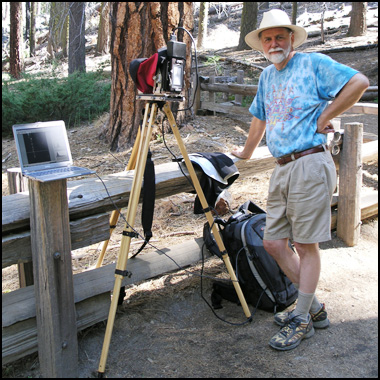
I’ve been a BetterLight user for a few years now. With their recent release of a USB based product, I have decided to document what the product is, and how I use it for landscape/fine art photography. Because there is a lot involved with this product, and it’s not something that is used as a DSLR would be, I’m going to discuss it in an on-going diary format.

Better Light Camera
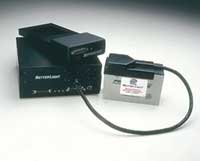
The new unit is much smaller, lighter and faster. This has suddenly made it much more approachable as a constant companion with my 4x5 gear. It weighs less, and fits in a smaller package than my film and film holders would.
Old vs. New
Better Light Camera Back
First of all, using a BetterLight for landscape photography isn’t for everyone. With the inherent quality, it brings restrictions and complications. By the same token, using a 4x5, 8x10 or 11x14 view camera isn’t for everyone.. and also brings restrictions and complications. This doesn’t make those cameras unusable for landscape photography, just as the restrictions don’t prohibit it for the BetterLight. As an example, take a look at the work by Kenro Izu. He’s hauled an 11x14 view camera all over the world, and has taken world class landscape images with it.
What is a BetterLight back? A quick browse of http://www.betterlight.com will give the product descriptions and more technical and sales information than I could begin to add here. I decided on the 6000-2 model. This means it has a native resolution of 6000x8000 pixels, and uses the 2nd generation Kodak tri-linear array. This provides much better noise handling, which means you can shoot more often in lower light. ISO ranges from 200 – 3200. Most of my images are taken in fairly low light, so I’m usually in the 1600-3200 ISO range. This isn’t as bad as it sounds, and one of the future entries will be a comparison of ISO quality of the 1DsMk2 and the BetterLight.
Better Light Cameras Reviews
The image capture sensor is a tri-linear array. This means there are three arrays of pixels, 6000 pixels long. Each array has a filter in front of it: Red, Green, and Blue. This array scans the film plane and captures the image, three rows of pixels at a time. This is a plus, and a minus. One of the attributes of the scanning back are the physical pixels. During the scan, the array moves linearly across the film plane. As a result, the color information is captured at slightly different times. If there is subject movement in the interval between pixel scans, then you end up with color fringing,: a rainbow pattern that can be found at the edges of the moving object.
Better Light Cameras Camera
The really good thing about this, though, is that *all* color information is captured for every pixel. This means there is no Bayer interpolation for the final image. All color and all resolution data is true, not interpolated. As a result, you end up with much more image information, and much truer color rendition than with any digital SLR (with the exception of the Foveon based Sigma cameras). Although the image resolution is 6000x8000 pixels, giving 48Mp, the resulting image quality would be comparative to a 96-144Mp image coming from a 1DsMk2 (this is image dependent). This comparison will be examined in a future installment of this series.Suffice it now to say, the detail in the images captured by this back exceed 4x5 sheet film (at least 100ISO Fuji Provia).
Security Lights With Camera
At each length of pixel locations (6000 long), an exposure occurs. This is referred to as the scan time, which ranges from 1/8 second to 1/240 second. If the scan time is 1/240 second, then the array takes an exposure at 1/240 second, then moves, next exposure, move. It does this 8000 times, resulting in about a 35 second exposure. If you only had enough light for a 1/8 second scan time then the total exposure would be 16 minutes long. Most of my exposures range between 35 seconds and 4 minutes. You can adjust the ISO settings (which will increase noise) to allow for shorter scan times.
Better Light Cameras App
I am leaving on a 3 week trip to Thailand and Cambodia. I will be using both the 1DsMk2 and the BetterLight during the trip. I will also be writing a trip report that will be published here on my return as part of this diary. In the trip report the pros and cons of both cameras will be compared, as well as the resulting images examined.